How to Become a Freelancer in 2026
Hi, I'm Grace — a freelance graphic designer, brand strategist, and marketing consultant. After 10+ years of freelancing, making millions doing it, and coaching 150+ people 1:1, here's everything I wish I'd known before I started.
$115K
My income in year one of
full-time freelancing
$2M+
My total income over the last 7 years,
freelancing full-time.
150+
Creatives coached to launch and scale their freelance business.
In December 2017, I emailed my boss and quit my last-ever salaried job. I was 24, making $65,000 a year, and had finally hit a wall trying to squeeze my multi-hyphenate nature into a single corporate title. So I went out on my own — and in my first full year of freelancing, I made $115,057. Nearly double my previous salary.
I share that number because I want you to understand: becoming a freelancer is a learnable skill. It's not luck, not connections, not a certain personality type. It's a set of decisions you make — about your services, your rates, your clients, and how you show up — that compound over time into something really good.
52% of Gen Z professionals and 44% of Millennials are already doing some form of freelance work — and that number keeps climbing. This guide is for anyone who wants to do it with intention, confidence, and a real plan.
"Knowing how to make money independently makes you the agent of your own life. No matter what the economy does — you'll have the skills to provide for yourself."
What freelancing actually means
Being a freelancer means being self-employed — part-time or full-time. You offer your skills to clients on a project or contract basis, set your own rates, choose your own clients, and take care of your own taxes and expenses. You design your own job.
The upside: ultimate flexibility, no income ceiling, total autonomy, and the kind of empowerment that comes from knowing you can always provide for yourself. The honest reality: income can be inconsistent early on, you'll handle your own benefits, and self-discipline becomes essential. None of these are dealbreakers — they're just things to plan for.
Step 1 — Get your finances ready before you leap
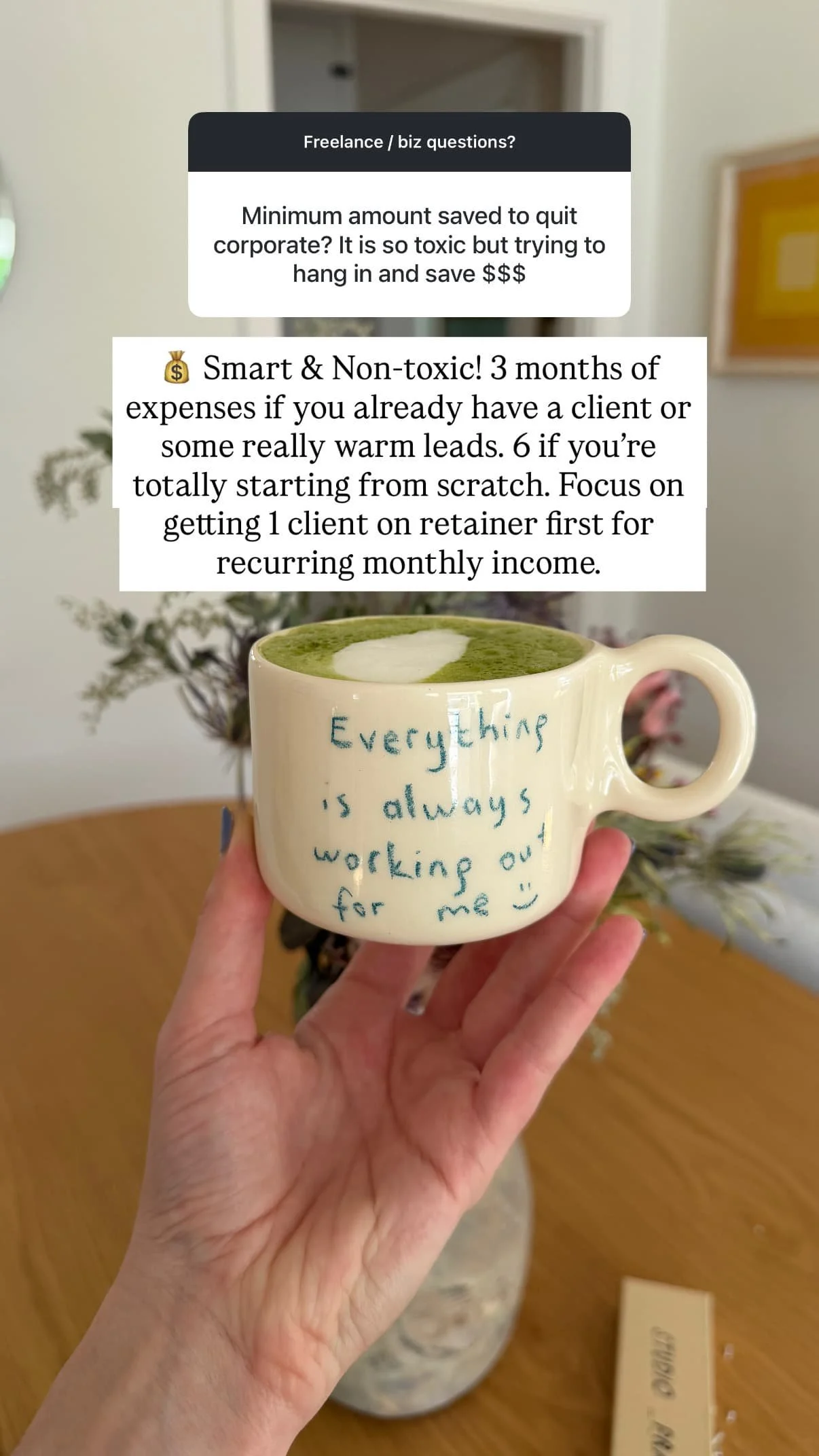
Before you quit your job (or even while you're building on the side), you need to know your number. Specifically: how much does it cost to be you every month? That figure becomes your freelance income target — and once you know it, it feels a lot less scary.
1. Calculate your monthly expenses Rent, utilities, groceries, insurance, loans — everything. Knowing this number removes the guesswork from client decisions.
2. Save 3–6 months of expenses This is your safety net. It's the difference between taking clients because you want to versus because you desperately need to.
3. Start freelancing on the side first Don't wait until you quit. Take clients while you still have a paycheck, and put that extra money straight into savings.
Inside the course: monthly expense calculator + financial setup walkthrough
The exact template I use, plus a step-by-step guide to setting up your finances for self-employment.
Step 2 — Turn your skills into freelance services
You almost certainly have skills people will pay for. The key is learning to articulate them as services — not just labels. A copywriter isn't just "a writer." A photographer isn't just "someone with a good camera." The more specifically you can describe what you do and the value it creates, the more clients you'll attract and the more you can charge.
Start by listing everything you do (or have done) in your current or past job. Then ask: what types of businesses need this? What outcome does it create for them? That's your service offering.
Inside the course: the skills-to-services exercise
A guided framework for turning your experience into a full service menu — with examples across industries.
Step 3 — Set up a digital presence (without overthinking it)
The number one thing that stops people from launching? Waiting for a perfect brand. Don't. Your brand will evolve. The only real misstep is not starting at all.
Start with LinkedIn — it's free, it's where clients look first, and updating it takes one afternoon. Then build a simple website (one month, Squarespace template, done). Social media is optional depending on your industry, but visual fields like photography and design should absolutely have Instagram. Then sign up for a couple of freelance job boards so people can find you passively while your active outreach does the heavy lifting.
Inside the course: LinkedIn optimization guide + website checklist
Exactly what to include on each page, what to write in your bio, and how to set up your site to convert clients.
Ready to stop reading and start doing?
The How to Go Freelance course covers all of this — and a lot more — in 13 lessons with templates, frameworks, and real examples.
Includes rate sheet, SOW template, contract, client outreach tracker + lifetime access
Step 4 — Set your rates (and actually say them out loud)
Most people start too low and struggle to raise their rates later. Here's a better approach: do your research first, pick a number you can say without flinching, and put it in writing before your first client call.
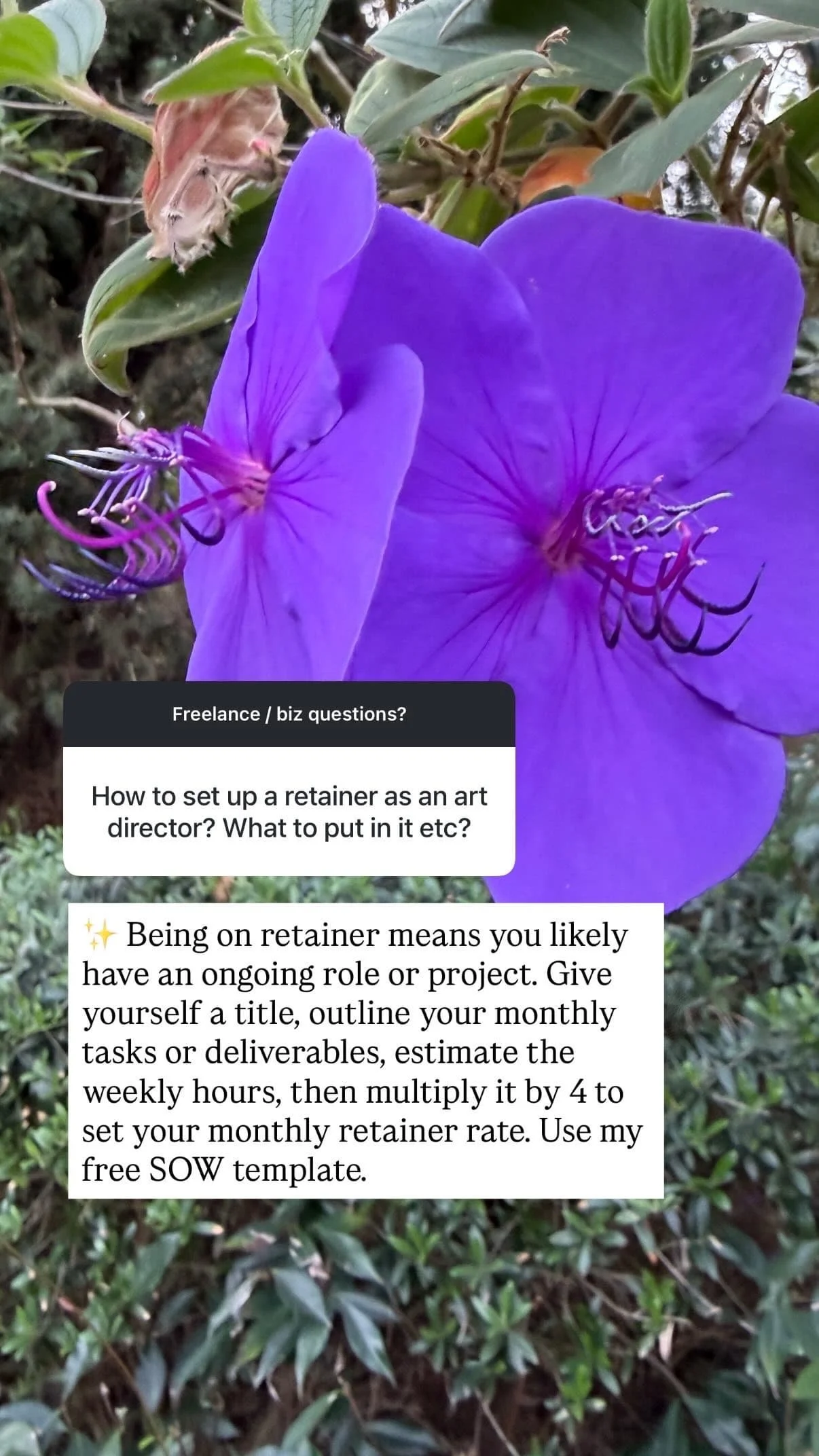
There's no single right way to price your services. Depending on the project and client, you might charge hourly, by the day, by deliverable, as a monthly retainer, or based on the long-term value of your work. Each model has its place — and knowing when to use which one is part of what turns a freelancer into a thriving business.
Inside the course: 5 pricing models + how to determine your exact rate
A step-by-step breakdown of every pricing approach, with formulas for figuring out what to charge.
Step 5 — Get clients
There's no shortcut here — but there is a clear sequence. Start with the people who already know you. Do your closest friends, family, and colleagues even know what you're offering? Send 10 personalized messages to your warm network before you do anything else. Even people who don't need your services might know someone who does.
Then go wider. Identify 20–30 businesses you'd genuinely love to work with, research what they need, and reach out directly with a personalized message that leads with value — not a request for opportunity. The goal of every cold outreach is simple: get them on a 15-minute call. From there, it's a conversation.
"Give off the energy of confidence, not desperation. Remember — they'd be lucky to work with you."
Inside the course: client outreach templates, cold email DNA + tracker spreadsheet
The exact framework I used to land my first clients, with copy-paste templates for every situation.
Step 6 — Handle the business side
You are your business now — which means contracts, invoices, taxes, and legal setup are on you. The good news: none of it is as complicated as it seems, and most of it only takes a little setup upfront.
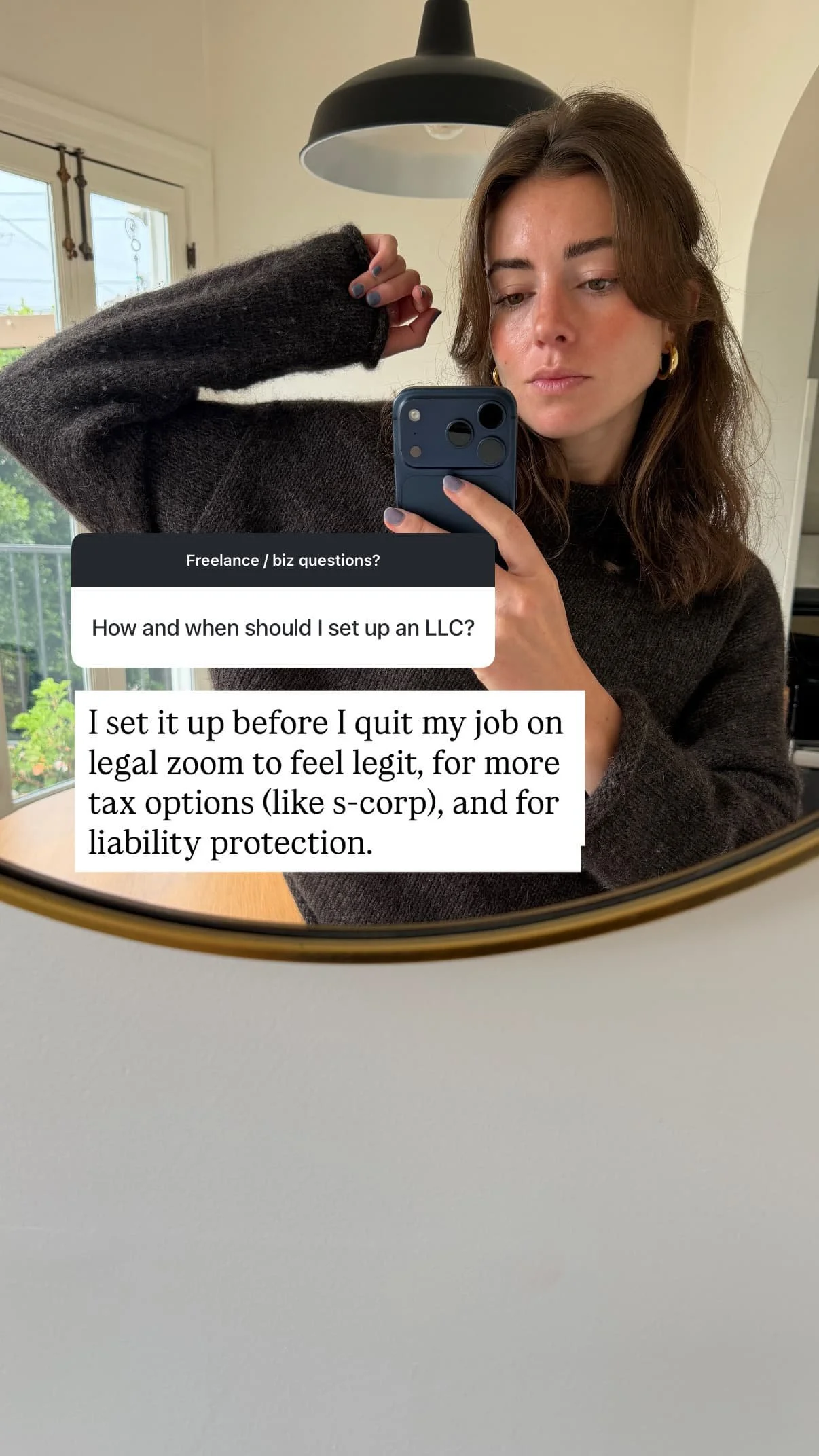
As a freelancer, you're a Sole Proprietor by default. As your income grows, an LLC offers liability protection and makes everything more official. At around $80–100K in net profit, an S-Corp election can start to meaningfully reduce your tax bill. Set aside 35–40% of every payment for taxes, open a separate business bank account immediately, and pay your quarterly estimates — April 15, June 15, September 15, and January 15.
Inside the course: contracts, invoicing systems, LLC setup + tax survival guide
Templates for every document you'll need, plus a full breakdown of taxes, business structures, and beyond — audited by a real lawyer.
"I can confirm I made (almost exactly!) 100x the cost of the course on this project. And I have turned it into a monthly retainer of 10x the course price. Life changing." – Student
Frequently Asked Questions
How much money can you actually make freelancing?
There's no ceiling. I made $115,057 in my first full year — nearly double my previous salary, and have had years grossing above $300K. Students of the How to Go Freelance course have reported going from agency jobs to $30K/month. Your income depends on your services, your rates, and how many clients you work with — all things you control.
Can I freelance while working a full-time job?
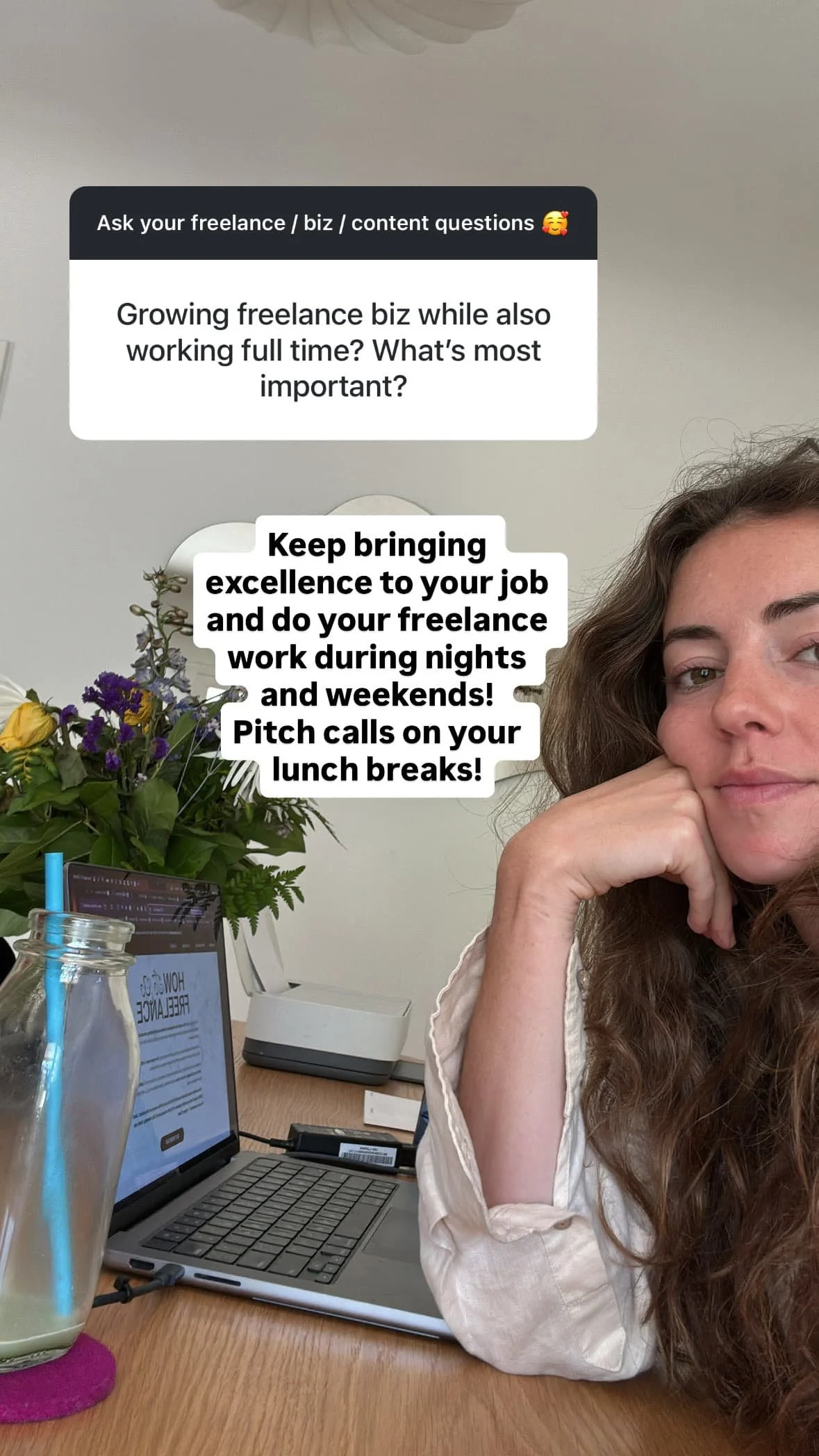
Yes — and we actually recommend starting this way. Build clients and savings on the side before you make the full leap. The overlap period is one of the best confidence-builders you can give yourself.
Do I need an LLC to start freelancing?
No. You can start as a sole proprietor and begin earning income right away. An LLC is worth setting up once you have consistent income and want liability protection. The course covers exactly when and how to do this.
How do I get freelance clients with no experience?
Start with your warm network — people who already know you and trust you. Build a small portfolio through personal projects or free work. Then do targeted cold outreach to businesses you genuinely want to work with. The key is leading with value, not a request for a chance.
How do I set freelance rates as a beginner?
Research market rates for your service and location, ask peers what they charge, and take your previous hourly equivalent and add 30% for self-employment taxes. Pick a number, say it out loud until it feels normal, and commit to it before your first client call. You can raise it as you go.